What Is Shockwave Therapy? Benefits, Uses & Safety Guide
If you're looking for a non-surgical treatment to relieve chronic pain, stubborn tendon injuries, or persistent soft tissue pain, you may be asking, what is shockwave therapy? This innovative treatment has become increasingly popular for helping patients recover from musculoskeletal conditions without surgery or lengthy downtime. Whether you're dealing with plantar fasciitis, tennis elbow, Achilles tendon pain, or other chronic injuries, understanding how shockwave therapy works can help you make an informed healthcare decision.
At Russian River Chiropractic in Santa Rosa, CA, we believe every patient deserves clear, evidence-based information before choosing a treatment option. In this guide, you'll learn what shockwave therapy is, how it works, its benefits, potential risks, recovery expectations, and whether it may be the right solution for your condition.
What Is Shockwave Therapy?
Many people searching for non-surgical treatment options ask, what is shockwave therapy?
Shockwave therapy, also known as Extracorporeal Shockwave Therapy (ESWT), is a non-invasive treatment that delivers high-energy acoustic waves to injured or painful tissues. These acoustic waves stimulate the body's natural healing response rather than simply masking pain with medication.
Unlike surgery, shockwave therapy requires no incisions, stitches, or general anesthesia. Most patients can return to their normal daily routine shortly after treatment, making it an appealing option for chronic musculoskeletal conditions.
What Does Shockwave Therapy Do?
One of the most common questions patients ask is, what does shockwave therapy do?
Shockwave therapy delivers controlled acoustic energy directly to injured tissue. These sound waves create mechanical stimulation that may help:
Improve blood circulation
Stimulate tissue regeneration
Encourage collagen production
Reduce chronic inflammation
Promote tendon healing
Decrease pain sensitivity
Improve flexibility and movement
Rather than offering temporary symptom relief, shockwave therapy is designed to activate the body's natural healing process. Many healthcare providers combine it with chiropractic care, rehabilitation exercises, stretching, and lifestyle modifications to achieve the best possible outcomes.
How Does Shockwave Therapy Work?
Understanding how shockwave therapy works helps patients know what to expect during treatment.
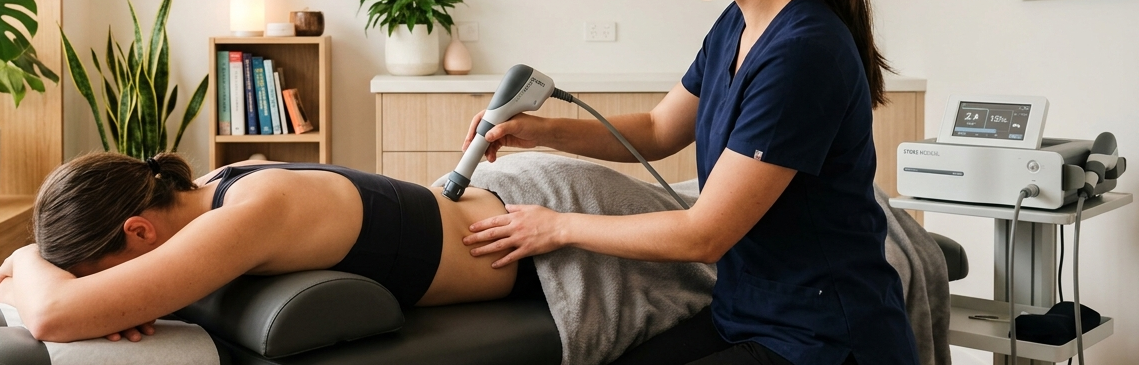
A handheld device delivers controlled acoustic waves through the skin into the injured tissue. These waves create microscopic mechanical stress that stimulates biological healing responses within the affected area.
Research suggests this process may help:
Increase blood vessel formation
Promote cellular repair
Improve collagen remodeling
Reduce chronic inflammation
Decrease pain receptor sensitivity
Because tissue healing takes time, improvements usually occur gradually over several weeks following a series of treatment sessions rather than immediately after the first visit.
Why Shockwave Therapy Is Used
Many patients ask why shockwave therapy is used instead of injections or surgery.
Healthcare providers often recommend shockwave therapy for chronic musculoskeletal conditions that have not improved with conservative treatments such as:
Rest
Physical therapy
Chiropractic care
Ice therapy
Anti-inflammatory medication
Activity modification
Since the treatment is minimally invasive, many clinicians consider it before recommending surgery for appropriate patients.
Its primary goals include:
Reducing chronic pain
Supporting tissue healing
Improving mobility
Restoring normal function
Helping patients avoid surgery whenever possible
Conditions Treated with Shockwave Therapy
There are numerous conditions treated with shockwave therapy, particularly chronic tendon and soft tissue disorders.
Common conditions include:
Plantar fasciitis
Achilles tendinopathy
Tennis elbow
Golfer's elbow
Patellar tendinopathy
Shoulder calcific tendinopathy
Greater trochanteric pain syndrome
Rotator cuff tendinopathy
Chronic muscle strains
Various tendon overuse injuries
A comprehensive clinical examination is essential to determine whether shockwave therapy is an appropriate treatment option for your specific condition.
Which Injuries Are Treated by Shockwave Therapy?
Shockwave therapy is commonly recommended for chronic overuse injuries that have persisted for several months and have not responded well to conservative treatment.
These injuries often develop from:
Repetitive movements
Athletic activities
Running
Occupational strain
Heavy lifting
Long-term physical stress
It is generally not considered the first treatment choice for acute injuries immediately following trauma.
What Happens During a Shockwave Therapy Treatment?
Knowing what happens during a shockwave therapy treatment can help you feel more comfortable before your appointment.
During your visit, your healthcare provider will:
Evaluate the injured area.
Identify the exact treatment location.
Apply a conductive gel to improve acoustic wave transmission.
Place the handheld device over the affected tissue.
Deliver a series of controlled acoustic pulses.
Each session typically lasts 10 to 20 minutes, depending on the condition being treated.
Most patients require three to six treatment sessions, although recommendations vary based on the severity of the injury and individual healing response.
Is Shockwave Therapy Painful?
A common concern among patients is whether shockwave therapy is painful.
During treatment, you may experience mild to moderate discomfort as the acoustic waves reach the injured tissue. The intensity varies depending on:
The location of the injury
Severity of symptoms
Individual pain tolerance
Treatment settings
Most patients tolerate the procedure well, and any discomfort generally subsides shortly after treatment is completed.
Your healthcare provider can adjust the treatment intensity to improve comfort while maintaining therapeutic effectiveness.
Shockwave Therapy Benefits
Many patients choose this treatment because of the potential shockwave therapy benefits supported by clinical research.
Potential benefits include:
Non-surgical treatment option
No anesthesia required
Minimal downtime
Reduced chronic pain
Improved mobility and flexibility
Enhanced tendon healing
Increased blood circulation
Stimulated collagen production
Faster recovery for selected conditions
Reduced inflammation
Improved physical performance
Quick outpatient treatment
Although many patients experience significant improvement, results vary depending on the diagnosis, severity of the condition, overall health, and commitment to the recommended rehabilitation program.
At Russian River Chiropractic, Dr. Adrian Villalba develops personalized treatment plans designed to help patients recover safely, improve movement, and return to the activities they enjoy. Whether you're recovering from a sports injury, managing chronic pain, or seeking conservative care to avoid surgery, our goal is to support your long-term health and mobility.
How Long Does Shockwave Therapy Take?
One of the most common questions patients ask is, how long does shockwave therapy take?
A typical shockwave therapy session lasts 10 to 20 minutes, depending on the condition being treated and the size of the affected area. Your first appointment may take a little longer because your provider will review your medical history, evaluate your symptoms, and determine the most appropriate treatment plan.
Most people require 3 to 6 treatment sessions, usually scheduled once a week. The exact number of sessions depends on factors such as:
The type and severity of your condition
How long you've had your symptoms
Your body's response to treatment
Your provider's clinical recommendations
Since Extracorporeal Shockwave Therapy (ESWT) stimulates the body's natural healing process, results are often gradual. Some patients notice improvement after the first treatment, while others experience significant pain relief and better mobility after completing several sessions.
How Long Is the Recovery Period from Shockwave Therapy?
Another frequently asked question is, how long is the recovery period from shockwave therapy?
One of the biggest advantages of shockwave therapy is that it requires little to no downtime. Most patients can return to work and normal daily activities immediately after treatment.
However, your healthcare provider may recommend avoiding high-impact exercise, heavy lifting, or strenuous activities involving the treated area for 24 to 48 hours. This allows the healing process to continue without unnecessary stress on the injured tissue.
Recovery timelines vary depending on the condition being treated, but many patients notice continued improvements over the following weeks as the body's natural repair process progresses.
Are There Any Side Effects of Shockwave Therapy?
A common concern among new patients is: Are there any side effects of shockwave therapy?
For most people, shockwave therapy is considered a safe, non-invasive treatment with minimal side effects. Because no surgery or injections are involved, complications are uncommon.
Some patients may experience temporary side effects after treatment, including:
Mild redness around the treatment area
Slight swelling
Minor bruising
Temporary soreness
Tenderness for a day or two
These reactions are generally mild and resolve on their own within a few days without additional treatment.
If symptoms persist or worsen, contact your healthcare provider for further evaluation.
Can Shockwave Therapy Cause Damage?
Many patients also ask, can shockwave therapy cause damage?
When performed by a trained healthcare professional using the appropriate settings, Extracorporeal Shockwave Therapy (ESWT) is generally considered safe. Serious complications are rare, especially when patients are carefully evaluated before treatment.
The acoustic waves used during treatment are designed to stimulate healing rather than damage healthy tissue. Following your provider's pre- and post-treatment instructions can further reduce the risk of complications and help you achieve the best possible outcome.
Like any medical treatment, shockwave therapy is not suitable for everyone, which is why a proper clinical assessment is essential before beginning care.
Who Should Not Undergo Shockwave Therapy?
Although shockwave therapy is safe for many people, it may not be the right choice for every patient.
Healthcare providers may recommend avoiding shockwave therapy if you:
Are pregnant
Have a bleeding disorder
Take certain blood-thinning medications
Have an active infection in the treatment area
Have certain cancers affecting the treatment site
Have open wounds near the treatment area
Are still growing (treatment is generally avoided over growth plates in children)
Your provider will review your medical history and current health to determine whether shockwave therapy is appropriate for your condition.
Is Shockwave Therapy Right for You?
If you've been living with chronic tendon pain or a soft tissue injury that hasn't improved with rest, physical therapy, or medication, you may be wondering whether shockwave therapy is the right treatment.
It may be an effective option for individuals experiencing long-term musculoskeletal pain who want to avoid surgery or repeated injections. During your consultation, your healthcare provider will evaluate your symptoms, medical history, imaging (if needed), and treatment goals before recommending a personalized care plan.
At Russian River Chiropractic in Santa Rosa, CA, our team focuses on identifying the underlying cause of pain and recommending evidence-based treatments that support your body's natural healing process.
Whether you're dealing with plantar fasciitis, tennis elbow, Achilles tendinopathy, chronic shoulder pain, or other soft tissue injuries, we can help determine whether shockwave therapy is the right solution for your recovery journey.
Shockwave Therapy vs SoftWave Therapy
Many patients compare Shockwave Therapy vs SoftWave Therapy when looking for non-surgical treatment options for chronic pain and soft tissue injuries. While both therapies use acoustic wave technology to stimulate the body's natural healing process, they differ in their technology, energy delivery, treatment approach, and clinical applications.
Shockwave Therapy uses focused or radial acoustic waves to target a specific area of injured tissue. It is commonly recommended for chronic musculoskeletal conditions such as plantar fasciitis, Achilles tendinopathy, tennis elbow, shoulder tendinopathy, and other persistent tendon injuries. The focused energy helps stimulate tissue repair, improve blood circulation, reduce pain, and restore function. Because of its effectiveness, shockwave therapy is supported by a substantial body of clinical research for treating several chronic tendon and soft tissue conditions. Healthcare providers typically recommend this treatment based on the patient's diagnosis, the severity of symptoms, and a thorough clinical evaluation.
SoftWave Therapy, on the other hand, uses patented electrohydraulic acoustic wave technology that distributes energy across a broader treatment area. Instead of focusing on a single point of injury, it delivers acoustic waves over a wider region to support tissue repair, improve circulation, and encourage the body's natural healing response. SoftWave Therapy is commonly used for musculoskeletal pain and tissue healing, with treatment recommendations depending on the patient's condition, the provider's clinical assessment, and overall treatment goals. While research supporting SoftWave Therapy continues to grow, additional high-quality studies are still being conducted to evaluate its effectiveness for a wider range of conditions.
Both therapies are non-invasive and aim to promote healing without surgery or injections. The best treatment option depends on your specific condition, medical history, and recovery goals. A qualified healthcare provider can evaluate your symptoms and recommend the most appropriate therapy based on your individual needs.
Is Shockwave Therapy Covered by Insurance?
One of the most common financial questions patients ask is, is shockwave therapy covered by insurance?
Insurance coverage varies depending on your provider, health plan, medical diagnosis, and where you live. Some insurance companies may cover shockwave therapy for certain medically necessary conditions, while others consider it an elective treatment and may not provide reimbursement.
Before starting treatment, it's always a good idea to contact your insurance provider to verify:
Whether shockwave therapy is covered
Which conditions qualify for coverage
Whether prior authorization is required
Any out-of-pocket costs or deductibles
The team at Russian River Chiropractic can also help answer general questions about treatment costs and available payment options.
How Much Does Shockwave Therapy Cost?
Another frequently asked question is, how much does shockwave therapy cost?
The cost of shockwave therapy depends on several factors, including:
Your geographic location
The healthcare provider's experience
The condition being treated
The number of sessions required
Whether your insurance covers part of the treatment
Because every patient's treatment plan is different, the best way to receive an accurate estimate is to schedule a consultation. Your provider can evaluate your condition and explain the recommended treatment plan along with the expected costs.
Why Choose Russian River Chiropractic for Shockwave Therapy?
At Russian River Chiropractic in Santa Rosa, CA, we believe every patient deserves personalized care focused on long-term healing—not just temporary pain relief.
Our team takes time to understand the root cause of your discomfort and develops individualized treatment plans based on your condition, lifestyle, and recovery goals. Whether you're struggling with chronic tendon pain, sports injuries, neck pain, low back pain, or repetitive strain injuries, we offer conservative chiropractic care designed to help you move and feel better.
Our services include:
If you're looking for a non-invasive solution to chronic musculoskeletal pain, our experienced team is here to help you explore whether shockwave therapy is the right option for your recovery.
Russian River Chiropractic
Location: Santa Rosa, California
Website: Chiropractor in Santa Rosa, California
Phone: +1 (707) 526-1928
Frequently Asked Questions
Can I return to work after shockwave therapy?
Yes. Most patients return to work and normal daily activities immediately after treatment. However, your provider may recommend avoiding strenuous exercise involving the treated area for a short period.
How many shockwave therapy sessions will I need?
Most treatment plans include 3 to 6 sessions, although the exact number depends on your condition, symptom severity, and how your body responds to treatment.
Does everyone benefit from shockwave therapy?
Not always. While many patients experience significant improvement, results vary based on the condition being treated, overall health, and adherence to the recommended treatment plan.
Is shockwave therapy painful?
Most patients experience mild to moderate discomfort during treatment, but the sensation usually lasts only while the acoustic waves are being delivered. Treatment intensity can often be adjusted to improve comfort.
How soon will I notice results?
Some patients notice improvements after the first or second session, while others experience gradual pain relief and improved function over several weeks as healing continues.
Author Bio
Dr. Adrian Villalba is a Santa Rosa–based chiropractor and movement specialist dedicated to helping patients achieve lasting health through evidence-based chiropractic care. Known for his precise adjustments, thoughtful movement integration, and compassionate approach, he works with individuals and families of all ages to relieve pain, restore mobility, and improve overall wellness.
At Russian River Chiropractic, Dr. Villalba combines personalized treatment plans with patient education to address the root cause of musculoskeletal conditions rather than simply masking symptoms. His mission is to help every patient build strength, confidence, and a healthier foundation for lifelong well-being.
